6 min
Official card retailer: Pokémon, Magic, One Piece
There is no legal status of official retailer: you are supplied through distributors, account by account. Documents, terms to compare and pitfalls.
Guides, tax and compliance for trading card shops.
Practical guides for opening and running a trading card shop: stock, buybacks, margin VAT, the police register and point-of-sale and management software. Each article answers a shop owner's question, using French rules.
There is no legal status of official retailer: you are supplied through distributors, account by account. Documents, terms to compare and pitfalls.
You are preparing to open: the guides in this section follow the real order of the steps, from legal structure to opening stock, by way of premises, insurance and the choice of games.
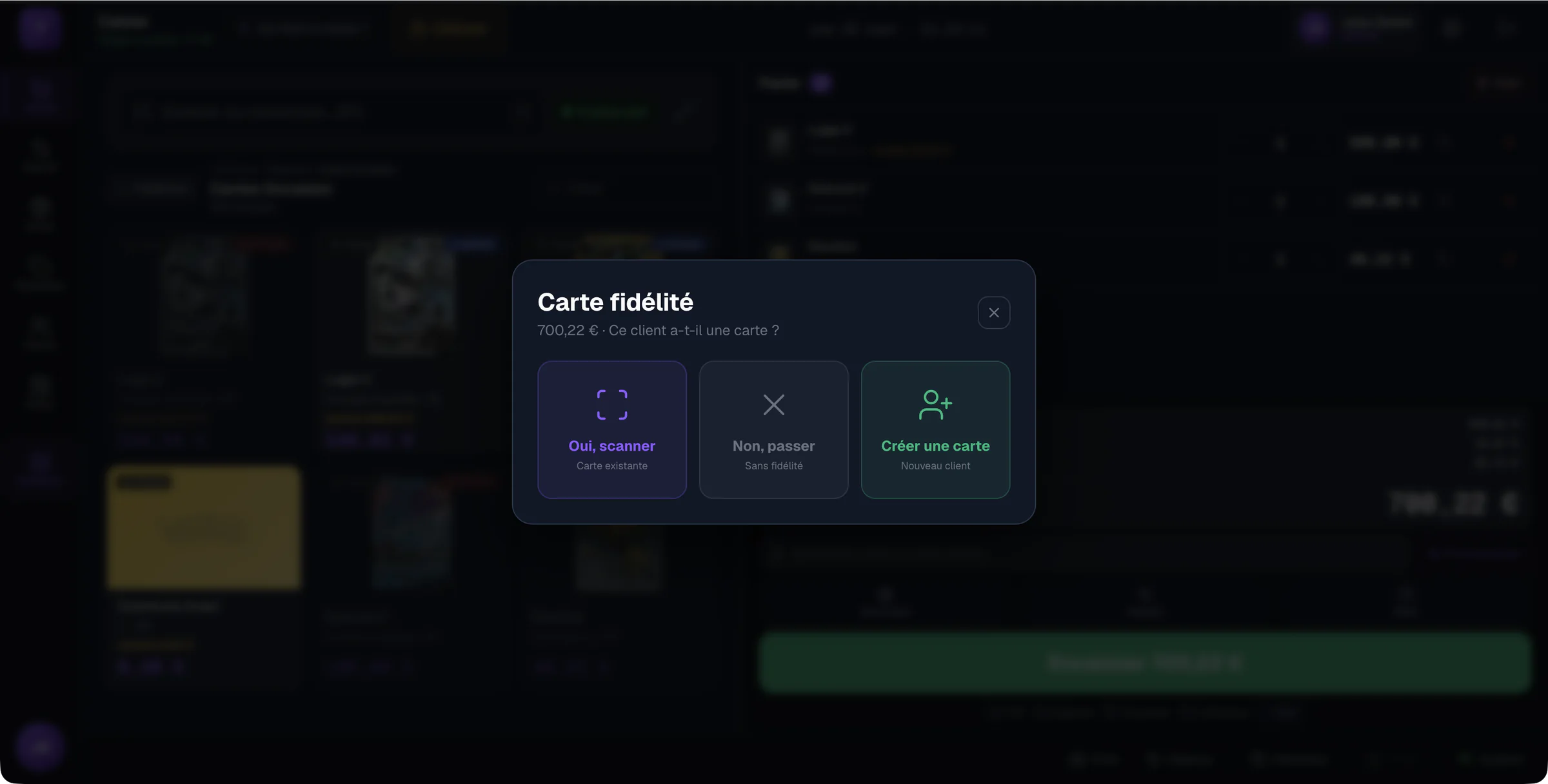
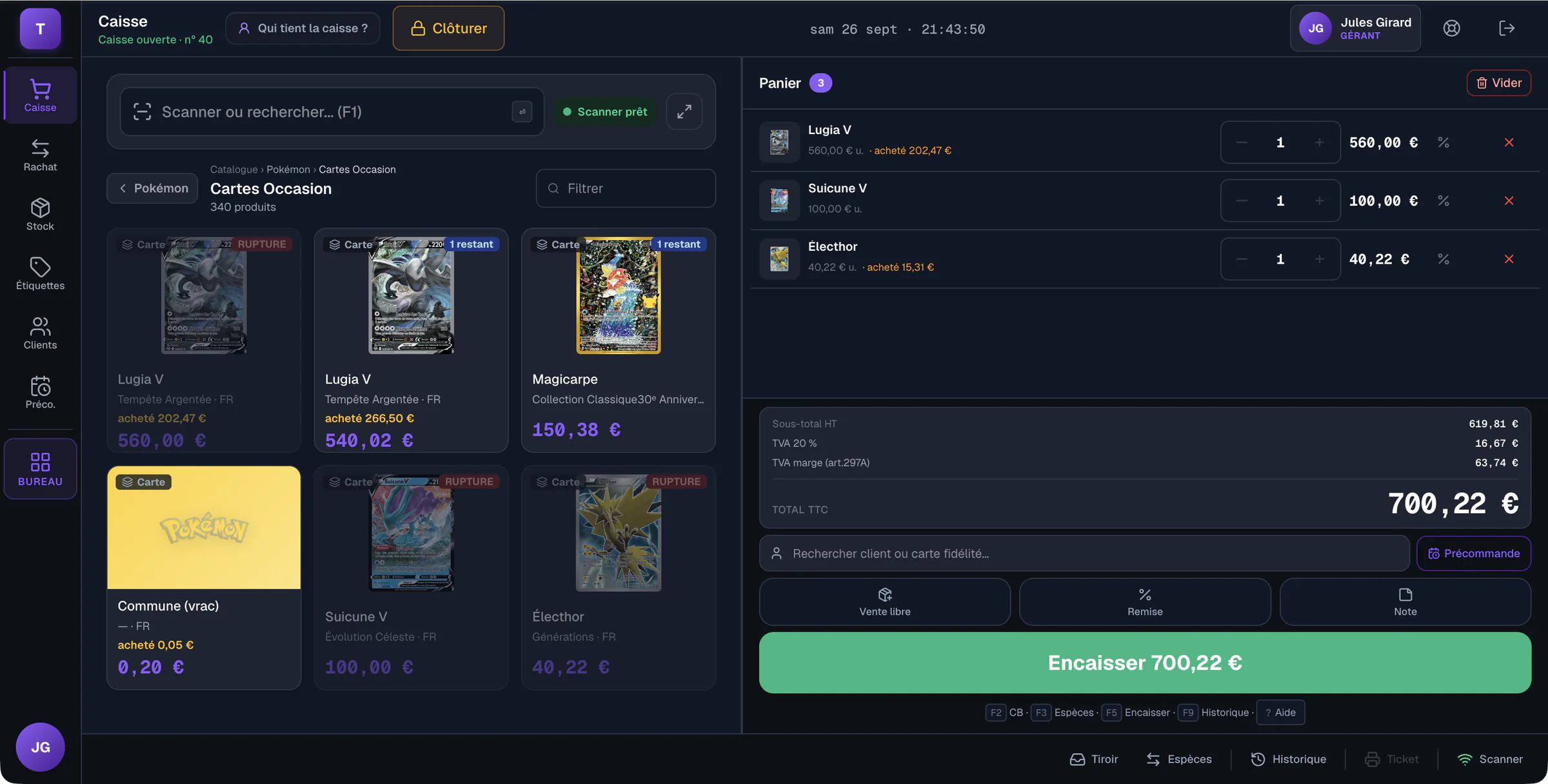
Your shop is already running: till, stock, selling prices, buybacks, pre-orders, loyalty, tournaments and hardware. Five pages also set out what software must handle for Pokémon, Magic, One Piece, Yu-Gi-Oh! and Lorcana.
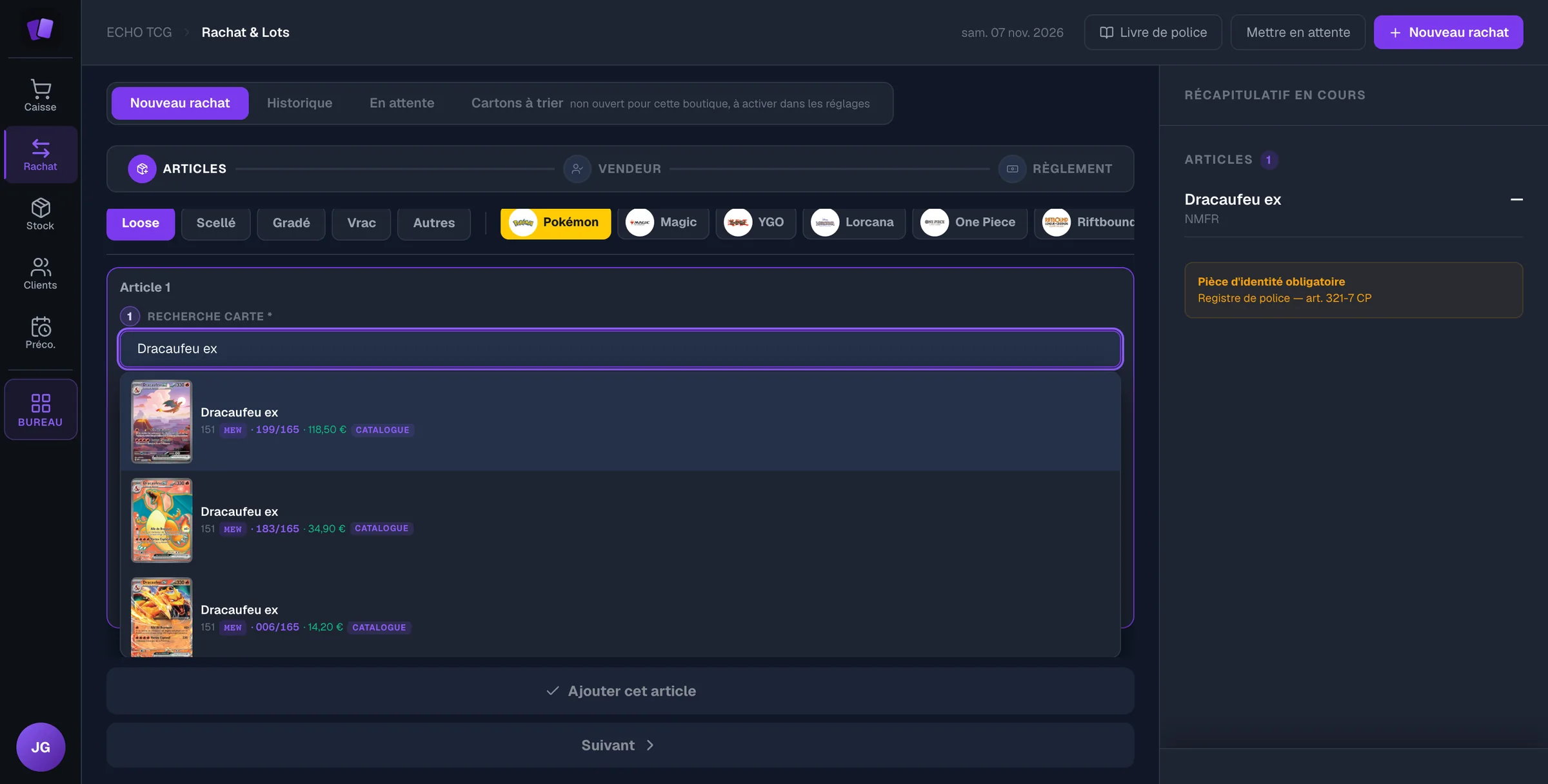
You buy cards from private sellers: this section explains margin VAT and the police register, then secure till software, invoices and receipts, e-invoicing and DAC7.
You also sell on Cardmarket or live on Whatnot: two guides explain how to keep one accurate stock and avoid selling the same card twice.
Several guides, including those on margin VAT and the police register, cite the official texts they rely on, with a link to each. The articles are written for shops in France and signed by the founder of Echo TCG; they are for information and do not replace advice from an accountant.
Sales of goods thresholds, contributions on turnover rather than margin, VAT exemption: what the micro-enterprise scheme really costs a card shop.
From choosing premises to the first month, organise the actions, dependencies and supporting guides needed to prepare your opening.
Prepare practical information, gatherings and local conversations to introduce your card shop when it opens.
Start with nearby players to choose your games, prepare releases and expand your card shop’s range gradually.
Valuable stock, in-store players and customers’ entrusted cards call for specific answers in your insurance policy.
Finding premises for a card shop means matching the location, layout and French commercial lease to the business you intend to run.
Choose till software for a card shop with a practical criteria checklist, questions for publishers and evidence to request before deciding.
A practical method for selecting sealed products, singles and accessories, preserving cash and adapting purchases from the first month.
The sections, supporting documents and connected assumptions needed to prepare a card shop opening and monitor the start of trading.
Micro-enterprise, sole trader, EURL or SASU: what each structure changes for a card shop, with the 2026 thresholds and the VAT trap on sealed product.
Showcase, sealed wall, counter, play table: how to organise 25 m² and what to buy first to open a card shop without tying up all your cash.
Status, registration, premises, supply, the till: the concrete steps to open a card shop in France without nasty surprises.
Publisher programme, preparing the event, entry fee, prizes and insurance: what a shop must settle before its first tournament.
Board games, new cards and bought-back cards in one sale: what till software must handle, and how to check it really does.
The columns to create, the formulas to use and the limits of a spreadsheet for a card stock, before moving to software.
Three sources of margin, three behaviours: worked assumptions to understand sealed products, single cards and buy-backs, and what VAT takes out.
A practical method for comparing market evidence, deciding by product type and keeping selling prices clear throughout the shop.
Organise displays, handling and inventory checks, then prepare a clear procedure for the team when theft is discovered in the shop.
Prepare regular events, welcome beginners and work with clubs to build a community around your shop’s play space.
The terms of the trade, grouped by theme and defined to help identify products, understand buybacks and organise everyday work in a card shop.
An iPad makes a good shop till, as long as you choose hardware it can drive.
Five customer types you meet in a card shop, what each expects, and why your own till tells you more than any average.
Pokémon is the biggest volume in a card shop. Here is what software must handle so it does not slow you down.
One Piece runs on allocation. Here is what software must handle so the same box is never sold twice.
Magic lives on singles. Here is what software must hold so the stock stays accurate.
Yu-Gi-Oh! is volume at low prices. Here is what software must handle to keep the inventory workable.
Lorcana draws players and collectors alike. Here is what software must separate to keep the stock accurate.
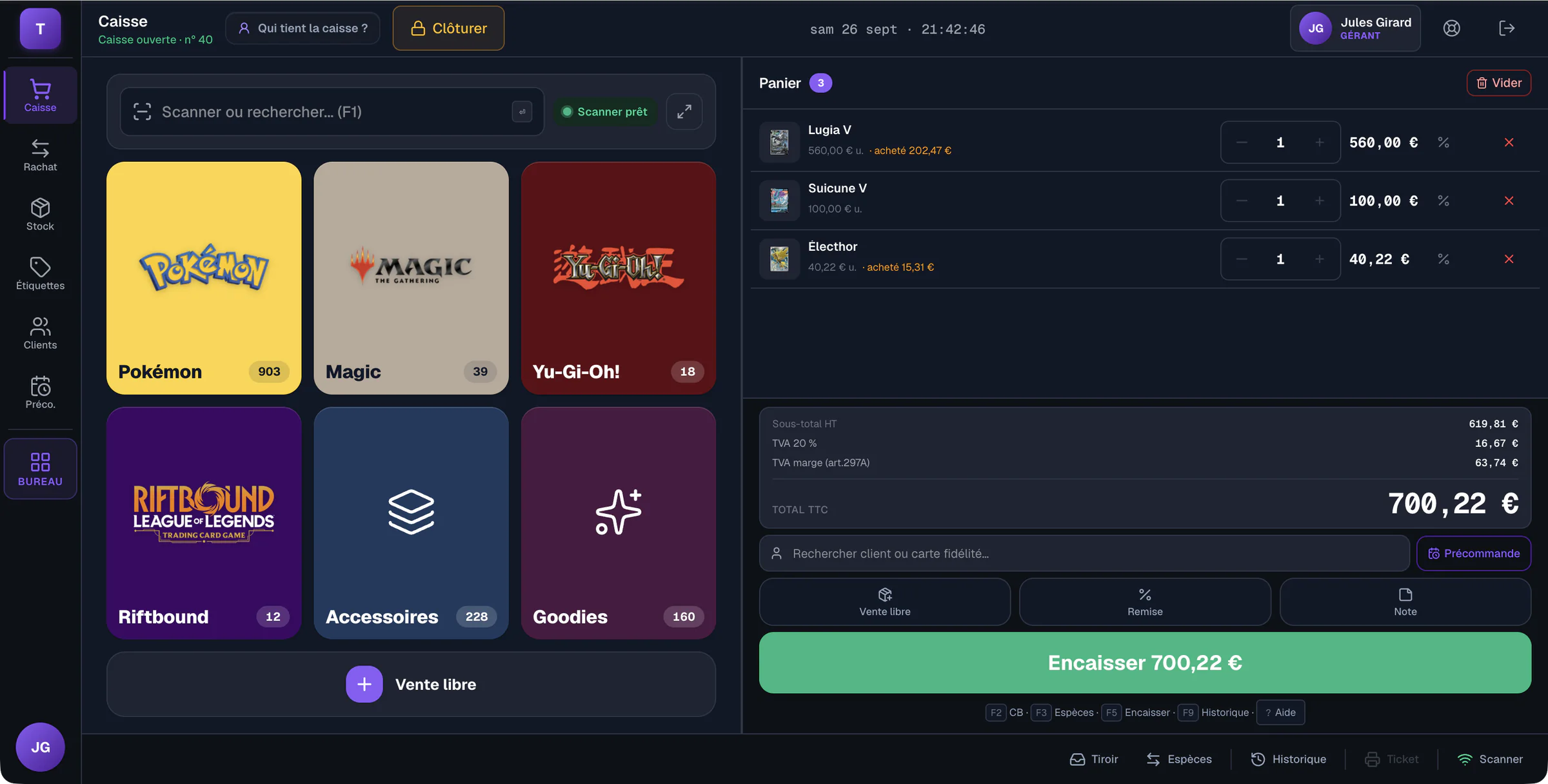
Taking payment is not enough. Here is everything management software must cover in a card shop.
A generic till doesn't speak the language of cards. Here's what real TCG software must handle, and how to choose.
Scanner, receipt printer, cash drawer, label printer, card terminal: what a card shop counter really needs, and how to choose each piece.
Limited allocations, pre-order lists, launch-day rush: how to run a set release without disappointing your customers.
Points, store credit, tiers: what really works to keep players and collectors coming back to your card shop.
Buying used cards is an underrated margin lever. The catch is setting a fair price, neither too high nor too low.
Check before buying, describe in the police register, apply margin VAT and track inventory: the journey of a slabbed card.
The 30 sales and €2,000 thresholds, the data reported, selling a collection versus a commercial activity: what DAC7 changes for anyone selling cards online.
Daily totals per VAT rate, no customer names, at a pace set by the VAT regime: what e-reporting asks of a shop selling to private customers.
Consignment grows your stock without tying up cash. It takes a few clear rules.
Till receipt or invoice: what a card shop must hand over at the till, to a business and for a service, and the margin-scheme VAT wording.
Association, club or shop: what changes when you sell cards and run tournaments, from the 2026 threshold to the lottery limit.
Opening a display and selling the cards as singles is allowed. The trap is tax: these cards are new, not second-hand, and their VAT is not the buyback VAT.
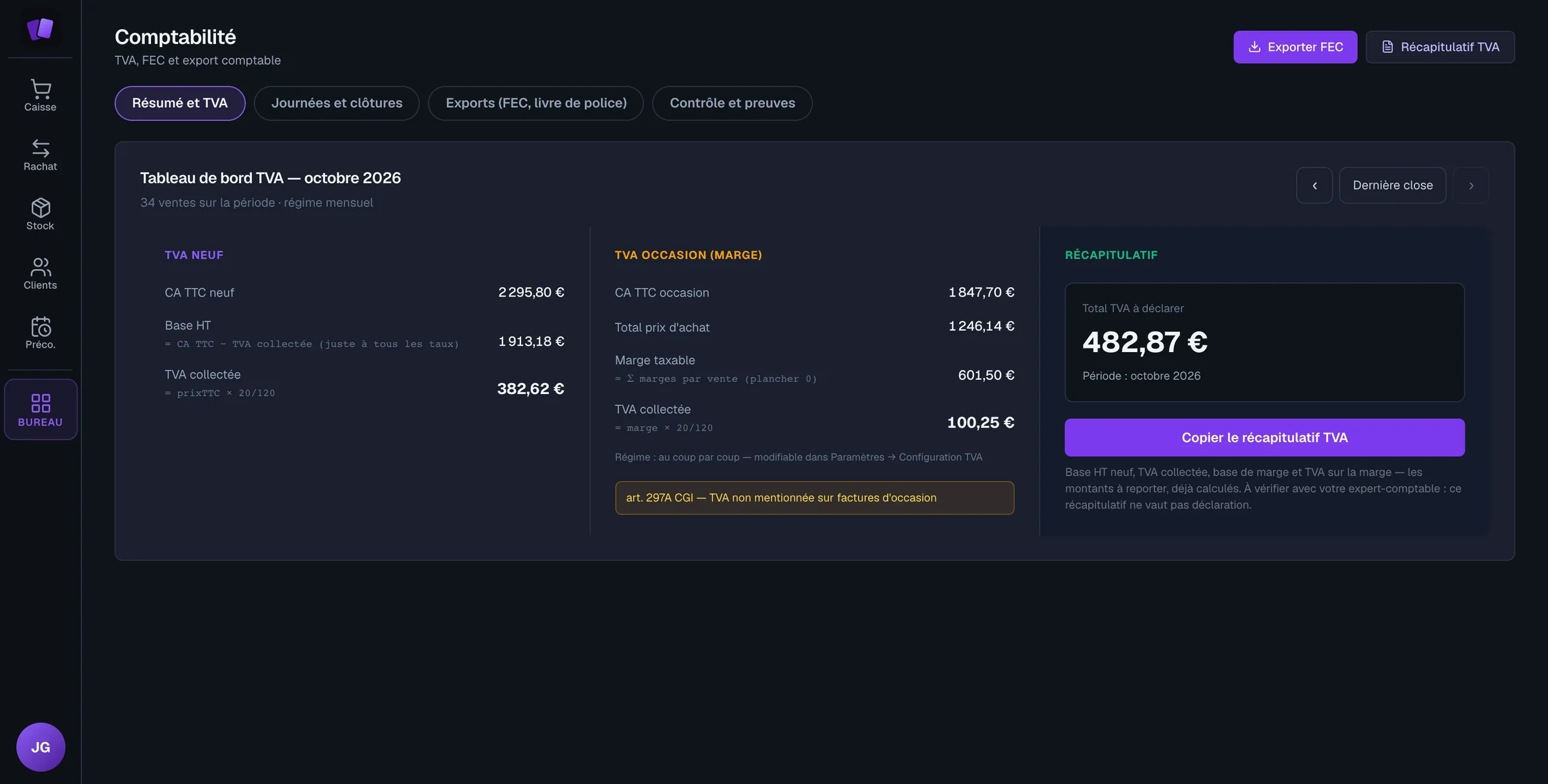
When you buy and resell second-hand cards, VAT is computed on the margin, not the full price. Here's how it works.
Secure POS software in France: who must comply, how to prove it, what the shop risks.
Receiving since September 2026, issuing in 2027: the B2B e-invoicing timeline, and what a TCG shop has to do.
Buying back used cards? Here's why the police register applies to your TCG shop, and exactly what to record at each transaction.
Live shopping pays off, but it sells the same stock as your counter and Cardmarket. Here is how to centralise without overselling.
The same card sold at the till and on Cardmarket is the classic trap. Here's how to keep stock accurate across every channel.
A member of the team shows you the software and answers your questions. No commitment.