Card shop customers: who comes in, and what they want
Players, collectors, parents, resellers: a card shop's customer types, what each expects, and how to learn about your own customers without made-up numbers.
By Paul Hilmarcher, founder of Echo TCG, working hand in hand with card shops.
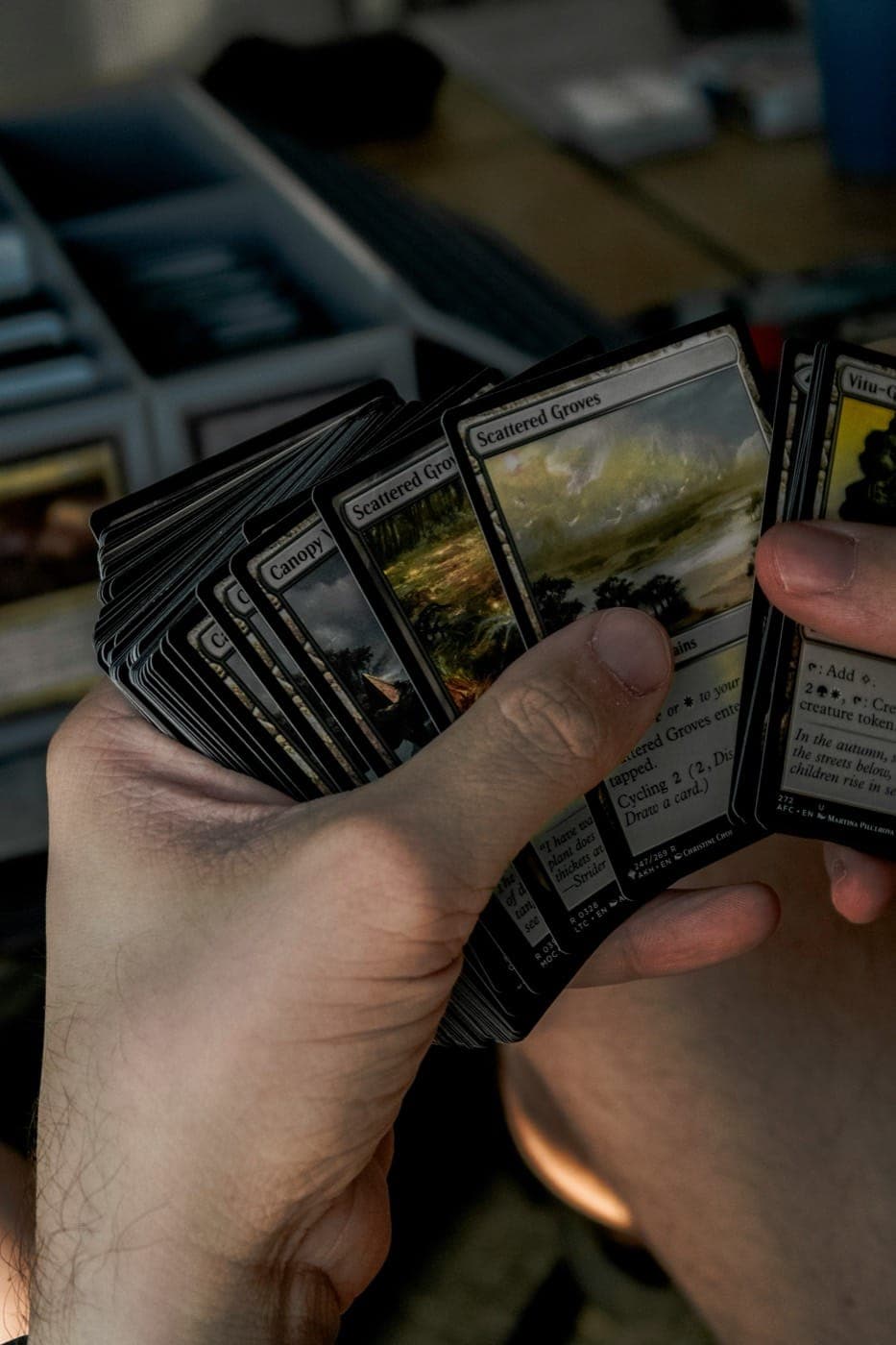
Behind the same counter, a teenager preparing for a tournament, an adult completing a collection, a mother looking for a gift and a reseller passing through have almost nothing in common. A card shop benefits from knowing which ones it serves, and from serving them differently.
Five types you find in a shop
- The regular player: comes to play, test decks, enter tournaments. Buys single cards, accessories, sometimes sealed product. Comes back every week and brings friends.
- The collector: follows the sets, looks for a specific edition, language or condition. Compares prices and asks about rarity. Buys less often, but sometimes at a high price.
- The parent or relative buying a gift: does not know the game. Wants clear advice, a respected budget and a product that will please. Mostly comes back before holidays and birthdays.
- The reseller or sealed-product investor: watches releases and stock, and compares with market prices. Also a customer who sells: may offer buybacks.
- The curious newcomer: saw a game in a video or at a friend's. The first purchase often decides whether they come back.
These are families, not boxes: the same customer is often a player on Saturday and a collector the rest of the week. Their share changes from one shop to another, depending on the neighbourhood, the games offered and whether there is a play area.
What each one expects, concretely
- The player wants a fair price on single cards, organised play and a welcome that recognises them. A regular tournament is worth more than any promotion.
- The collector wants an exact description (edition, language, condition) and trust that the card is the one advertised.
- The parent wants jargon-free explanations, and honesty when a product does not suit the child's age.
- The reseller wants reliable availability and preorders, and a buyback whose price is explained.
- The newcomer wants a simple way in: a ready-to-play deck, and someone who takes ten minutes to show them.
“How many customers a day?”: the only good answer is yours
It is a common question before opening. There is no serious figure that holds for every shop: a city-centre unit, a neighbourhood shop and a play room are not the same business, and one shop changes pace between a quiet Tuesday and a release Saturday. Be wary of averages that circulate without a source.
What matters is what your till records. A few weeks of receipts are enough to see the busy days, the number of visits, the average basket and the share of customers who return. Note the events too (tournament, set release, school holidays): they explain the gaps better than an average.
Knowing your customers without exposing yourself
As soon as you note a name, an email address or a phone number, you hold a file of personal data, and the GDPR applies, even to a small shop. A few simple rules:
- collect only what is really useful (a name and a contact for a loyalty card, for example);
- tell the customer what their data is for, and that they can access it, have it corrected or erased;
- for commercial emails and SMS, ask for consent; you may skip it for a customer who has already bought, for similar products, if they were told at collection and can unsubscribe in every message;
- for a customer under fifteen, get a parent's consent before any online sign-up or commercial message;
- do not keep data indefinitely: three years after the last purchase or last contact is the CNIL's benchmark for a commercial file; show it only to team members who need it;
- keep a record of processing activities: the CNIL offers a simplified one-page template for small businesses.
The CNIL, the French data protection authority, publishes a guide for shopkeepers (“RGPD : se préparer en six étapes”, GDPR in six steps): that is the source to consult for your own case. This article gives pointers, not legal advice.
Serving each type without complicating the counter
No need to multiply labels. Three habits are enough: recognise regulars by first name, remember what each is looking for (a card, a set), and tell them when it arrives. A simple loyalty programme, like the one described in our article on loyalty in a card shop, extends these gestures without replacing them.
Frequently asked questions
- How many customers per day does a card shop get?
- No figure fits every shop: location, size, tournament days and the week's releases change everything. Count your own receipts, day by day, over a few weeks: that is the only useful reference.
- What are the main customer types in a card shop?
- Typically regular players (decks, tournaments), collectors (sets, editions, condition), parents or relatives buying gifts, resellers or investors in sealed product, and curious newcomers. Their share varies from one shop to another.
- Can a shop keep a customer file?
- Yes, but it is personal data processing under the GDPR: collect only what is useful, inform the customer, keep the record of processing activities, do not keep data forever, and let customers refuse or stop commercial messages. For an existing customer, messages about similar products are allowed without prior consent, provided they can unsubscribe at any time. When in doubt, the French data authority (CNIL) publishes guides for shopkeepers.
Echo TCG: the POS and management software for card shops.
From €49 a month, with no commission on your sales. See pricing