Software for a Lorcana shop: rarities and releases
Enchanted cards, rarities not to be confused, chapter pre-orders and buybacks: what software must handle in a Disney Lorcana card shop based in France.
By Paul Hilmarcher, founder of Echo TCG, working hand in hand with card shops.
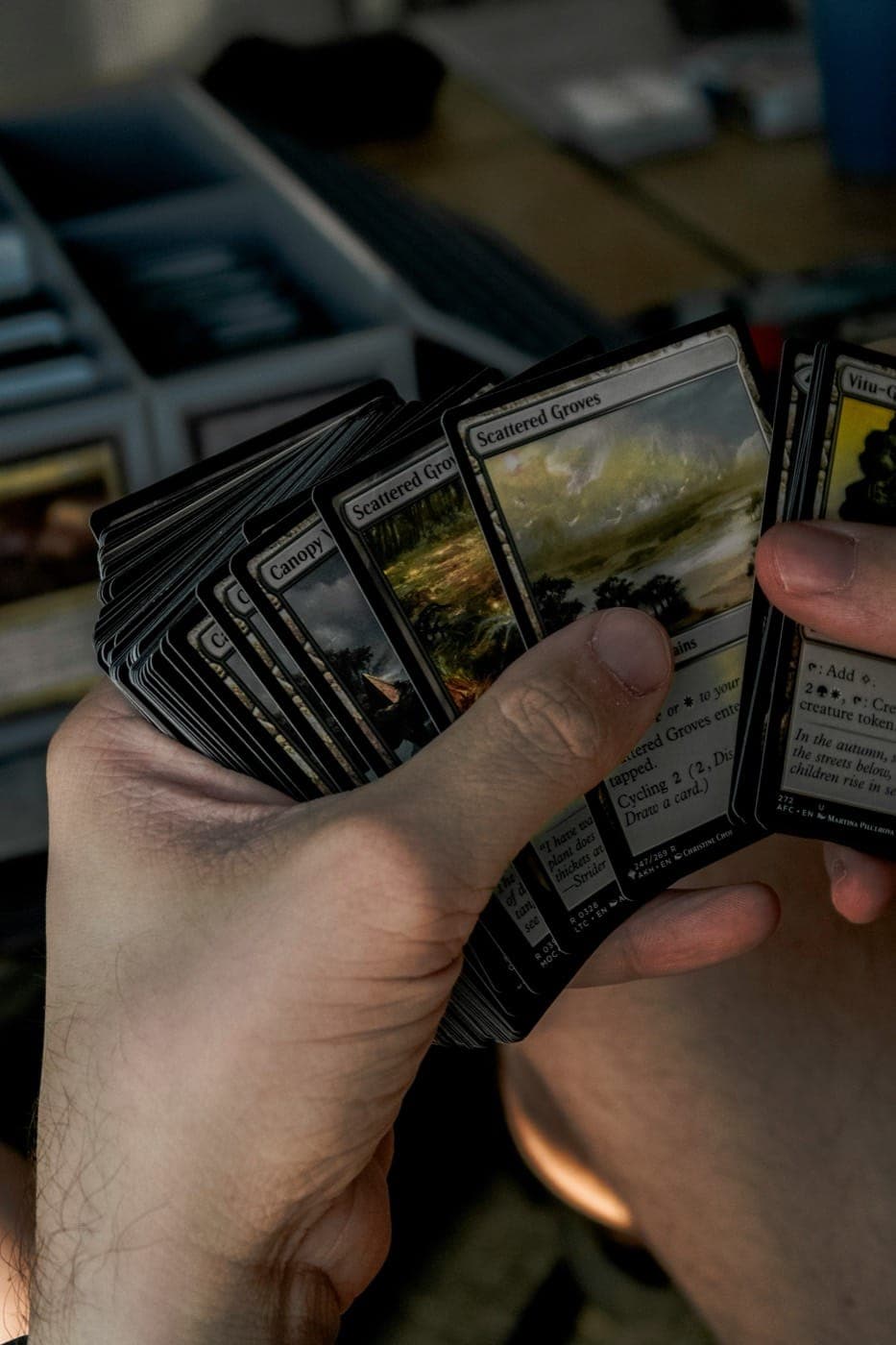
Disney Lorcana draws two audiences at once: players, and collectors who will never play. For a shop, that changes how stock is held: the same card can interest both, at very different prices.
Rarities, and the enchanted trap
Lorcana stacks several rarity tiers, and enchanted cards carry the same character name as their normal version. Without a distinction in the catalogue, two unrelated products land on the same stock line.
Software must therefore carry rarity as a property of the card, with its image, not as a note in a comment field.
Chapters and pre-orders
A chapter release requires comparing expected products with promised quantities. A pre-order is a real commitment, and it needs the same discipline as on other games.
- Reserve stock as soon as the order is taken, so it is no longer sellable elsewhere.
- Take a deposit, which commits the customer as much as the shop.
- Alert on release day, when the product becomes available.
Sealed product
Displays, boxes and companion products behave as elsewhere, with the same caution: names look alike from one chapter to the next. A catalogue with images prevents entry mistakes.
Second-hand buybacks
Lorcana being recent, buybacks mostly cover collections built since launch. The French obligations are the same as for other cards: police register on purchase, margin VAT (art. 297 A) on resale.
Tournaments
Official events go through the Ravensburger Play Hub, the publisher's own tool, which offers no open API. Shop software handles player sign-ups, entry fees through the till, prizes, then exporting the participant list.
What should you check before buying an enchanted card?
Identify the exact version on the physical card before discussing its price. Compare the number, chapter, rarity, language and artwork with the catalogue entry. The character name alone cannot distinguish versions. Then examine the copy's condition: a catalogue image shows the reference card, not any flaws in the copy the customer presents.
A card assessed and encapsulated by a specialist organisation is handled as a distinct product. Echo TCG supports graded cards and highlights those missing a certificate number. This helps complete the record; it is not an expert assessment of the card. Check the details on the holder and keep a description your team can find again when selling it.
Before filing the purchase, match each record to its copy. If any information remains uncertain, keep the card aside for checking. This lets you explain to a collector exactly what you offer without assuming every card of the same character has the same appearance or value.
How do you prepare a chapter release with an in-store event?
Prepare customer collections and event registrations separately. First compare the supplier order with quantities actually received, then review pre-orders before shelving the remainder. An ordered quantity is not yet an available box. If a delivery is short, identify the affected reservations before announcing that all collections can begin.
In Echo TCG, supplier orders distinguish ordered, received and late quantities. Pre-orders are available from the Pro plan. When handing over a product, check the customer, reference and quantity. This avoids confusing a reserved purchase with a product chosen in the shop.
For the event, Echo TCG handles registrations, adds entry fees to the basket and exports participant lists. Official results remain in the publisher's tool. Explain this separation to staff and assign clear tasks: handing over products, taking entry fees or welcoming players. A customer simply collecting an order should be able to do so without waiting for the tournament to start.
Compliance
In France, a VAT-registered shop that takes payments from consumers through POS software must use secure software: sales that cannot be altered, secured, kept and archived, with periodic (Z) closings. The proof is a certificate (NF525, for example) or the publisher's individual attestation (art. 286, I-3° bis of the French tax code). Shops under the VAT basic exemption are not subject to it.
Echo TCG covers these needs for Lorcana: built-in catalogue with images, rarities kept apart, pre-order reservation, buybacks with a police register and automatic margin VAT.
Frequently asked questions
- What software for a Disney Lorcana shop?
- Software carrying the Lorcana catalogue with images and a reference price, able to separate rarities and enchanted cards, handle sealed product and pre-orders with reservation, buybacks with a police register and margin VAT, and, if the shop is VAT-registered, meeting the secure POS requirements (certificate or publisher's attestation).
- Why separate enchanted cards in stock?
- Because an enchanted and its normal version share a name at unrelated prices. If software does not split them, the inventory goes wrong and a rare card can leave at a common's price.
- How do I handle a Lorcana chapter release?
- Reserve stock at pre-order time and take a deposit. What is reserved must no longer be sellable elsewhere, otherwise the same box sells twice on release day.
- Does a tournament registration reserve a box?
- No. Registration concerns a place at the event; a pre-order concerns a product and its quantity. Check each commitment separately, even if the customer pays for both during the same visit. For collection, review the recorded deposit and expected product. For the tournament, find the participant registration and corresponding entry fee.
- Is a catalogue image enough to describe a Lorcana card’s condition?
- No. It helps identify the version but does not show your copy’s condition. Examine the physical card and record its condition before offering it. For a graded card, also check the holder details and certificate number. A precise record lets the next employee present the right product to the customer.
Echo TCG: the POS and management software for card shops.
From €49 a month, with no commission on your sales. See pricing