Card consignment: VAT, police register and software
Selling cards on consignment in a card shop: margin VAT on the commission, turnover, police register, written contract and tracking in the till software.
By Paul Hilmarcher, founder of Echo TCG, working hand in hand with card shops.
Consignment lets a shop offer expensive cards without buying them upfront: a private individual hands over cards, the shop sells them and pays back part of the price. Stock grows without tying up cash. In return, the shop needs precise rules on VAT, the police register and the payout.
The shop sells in its own name
In a card shop, consignment nearly always works the same way: the shop shows the price, takes the payment, issues its receipt, and the buyer does not know the consignor. For tax purposes, the shop then acts as an agent selling in its own name. Have your accountant confirm this classification: everything else follows from it.
VAT applies to the commission
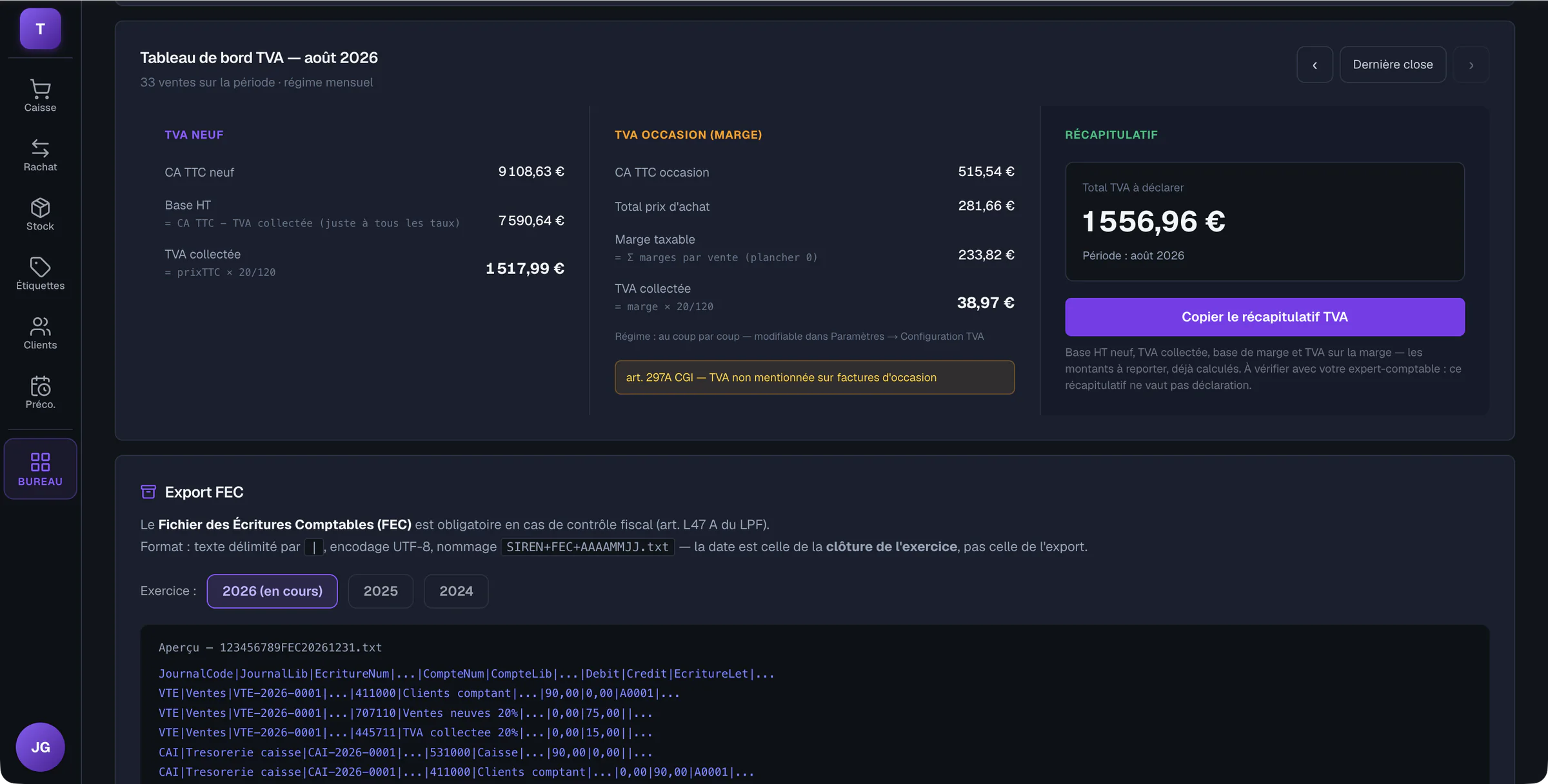
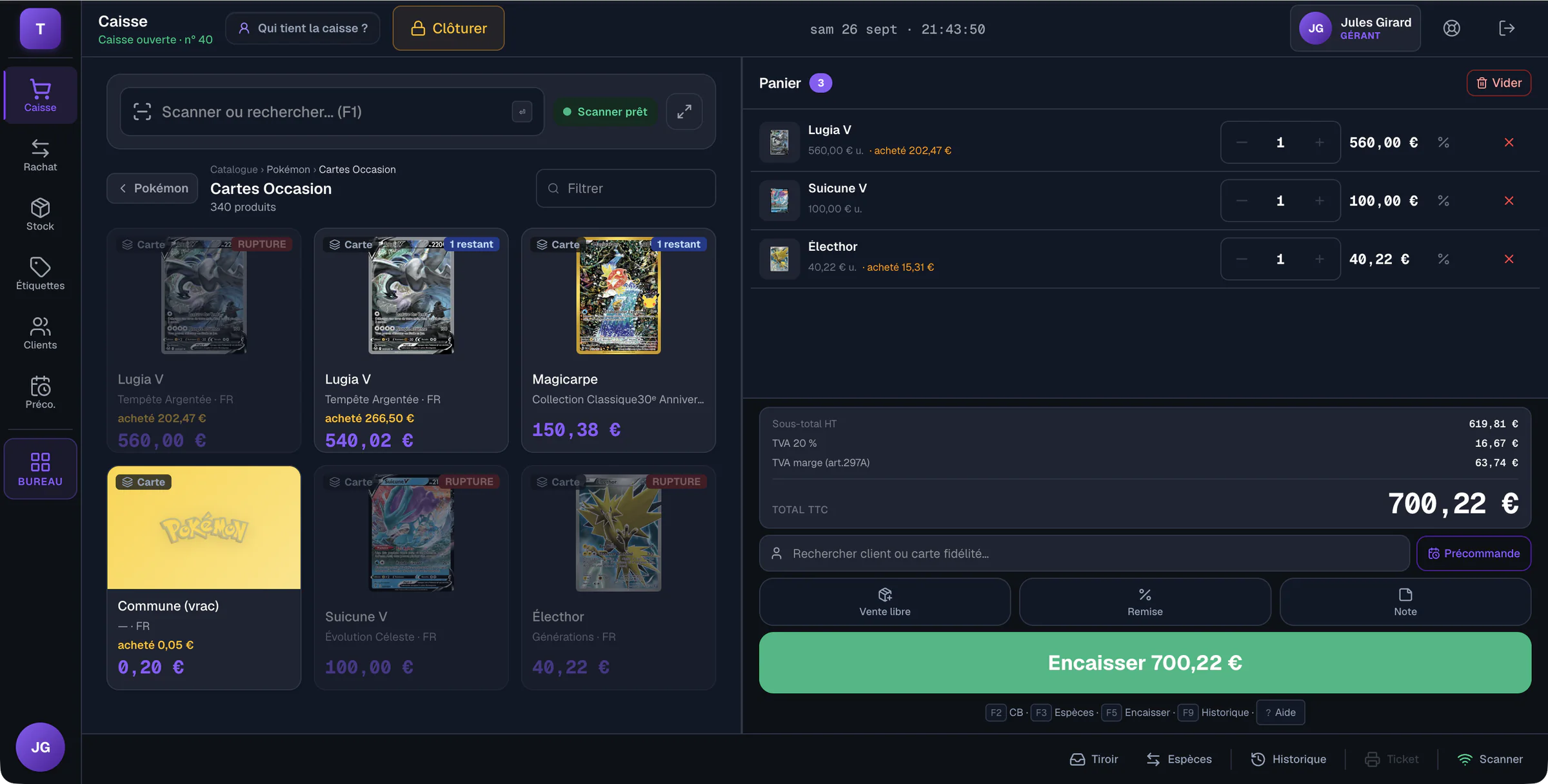
A card from a private individual falls under the margin scheme for second-hand goods. The amount paid back to the consignor stands as the purchase price: VAT is calculated on the difference only. Example: a card sold for €50, with €40 going to the consignor, leaves a €10 margin, VAT included. The shop pays no VAT on the consignor's money.
- Sale price: €50.
- Payout to the consignor: €40.
- Margin, VAT included: €10, on which VAT applies.
Turnover counts the full price
Since the shop sells in its own name, the full price, €50 in the example, counts in its turnover, not just the €10 commission. This does not change the tax due, but it matters for thresholds: the VAT exemption and the micro-enterprise ceiling. A shop doing a lot of consignment reaches them sooner.
The police register, from hand-over
The police register tracks the second-hand goods the shop holds, not only those it owns. A consigned card therefore goes in as soon as it is handed over, with the consignor's identity, without waiting for the sale.
The consignment contract
A written contract avoids disputes. It states that the shop sells in its own name, the consignment period, the minimum accepted price and the payout. Prefer a percentage of the actual sale price to a fixed amount: the commission stays positive even if you lower the price.
In the till software
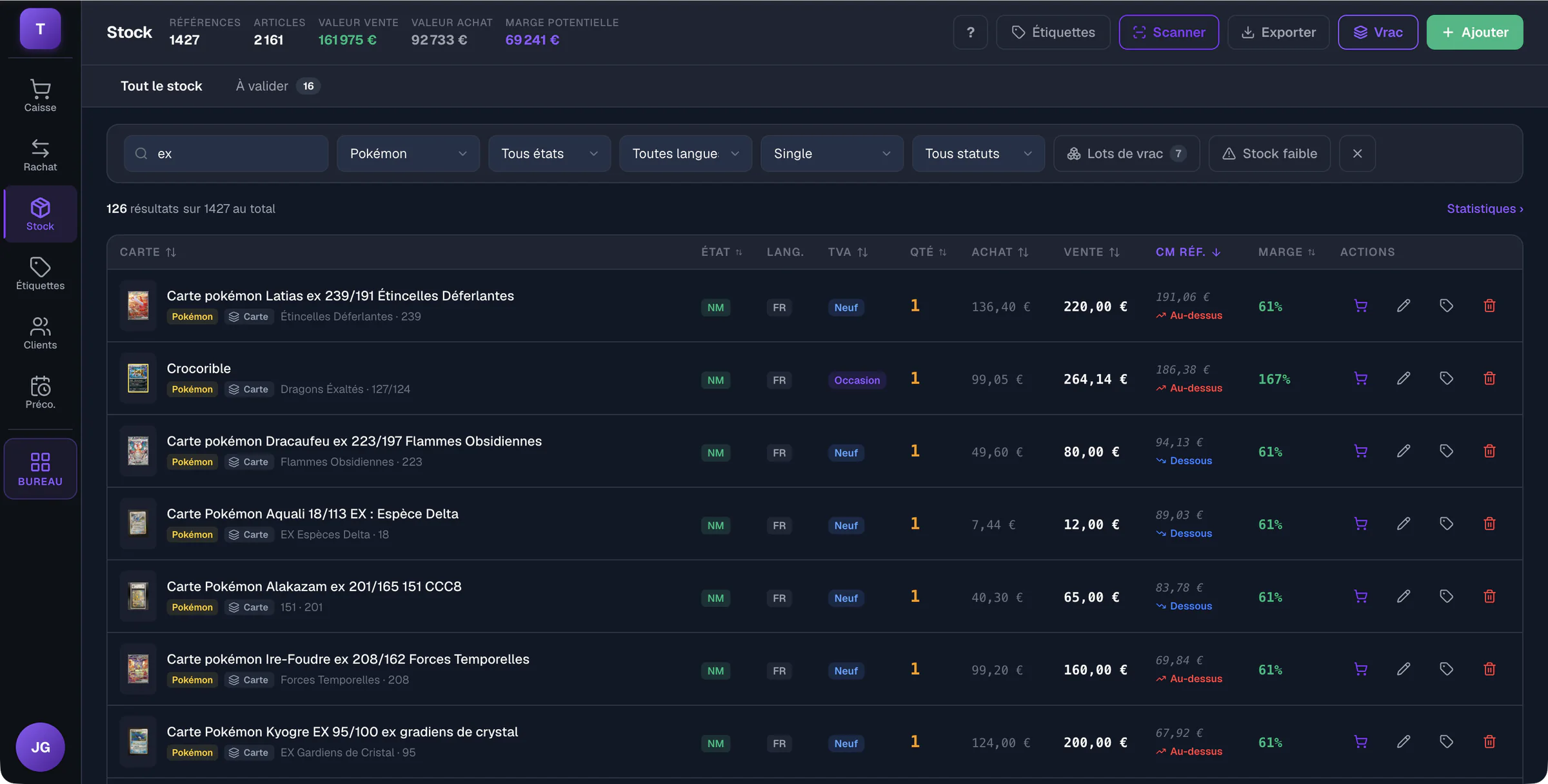
In Echo TCG, a consigned card enters stock like any other. It sells by scanning it at the counter, or online on Shopify or Cardmarket; the consignment settles itself when the card goes, whatever the channel. The consignor signs the contract on screen, receives a notice when the card is sold, and the amount owed is tracked until it is paid.
- Article 297 A of the French Tax Code (Légifrance, in French): the margin scheme and its tax base
- Articles 297 A to 297 G of the French Tax Code (Légifrance, in French): the whole margin scheme
- BOFiP, BOI-TVA-SECT-90 (in French): second-hand goods, taxation principles
This article is informational and does not replace the advice of an accountant or lawyer.
Frequently asked questions
- How is VAT calculated on a card sold on consignment?
- Under the margin scheme, VAT applies to the difference between the sale price and the amount paid back to the consignor. A card sold for €50 with €40 going to the consignor leaves a €10 margin, VAT included.
- Does a consigned card go into the police register?
- Yes, as soon as the shop receives it. The police register tracks possession of second-hand goods, not ownership: a consigned card enters it when handed over.
- Should the payout be a fixed amount or a percentage?
- A percentage of the actual sale price is safest: the shop's commission always stays positive, even if the price drops. Write it into the consignment contract.
Echo TCG: the POS and management software for card shops.
From €49 a month, with no commission on your sales. See pricing