Selling cards and running tournaments as an association
Can an association sell cards? 2026 threshold, tournament entry fees, lotteries and the police register: pointers reviewed by a lawyer and an accountant.
By Paul Hilmarcher, founder of Echo TCG, working hand in hand with card shops.
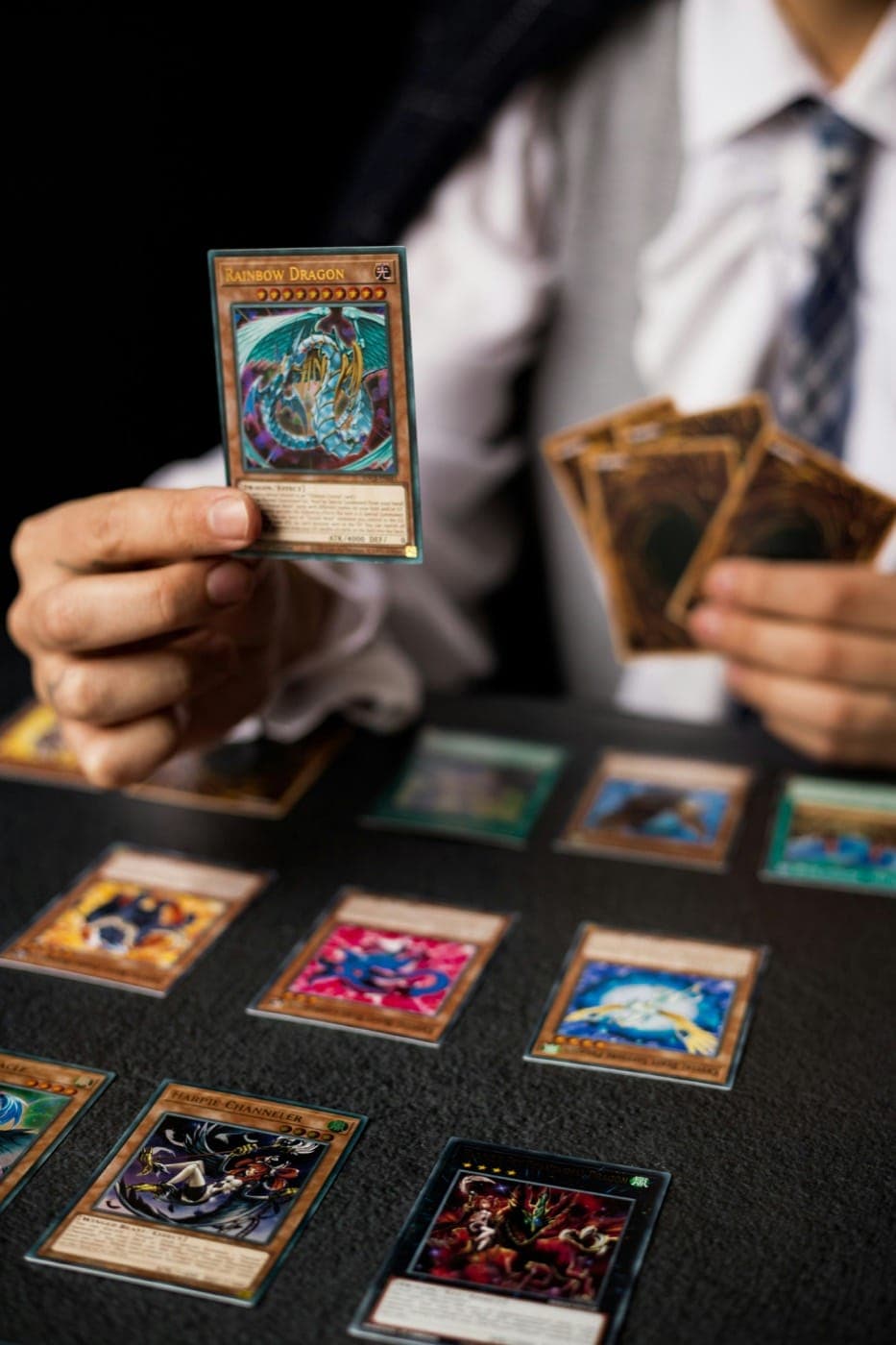
A card shop, a players' club and a French 1901-law association can all sell cards and run tournaments. The rules are not the same, and some mistakes are costly. This article gives pointers; it does not replace professional advice.
Shop, club, association: three different frameworks
- The shop is a business: it sells habitually, invoices according to its VAT regime, and keeps a police register for the second-hand cards it buys back.
- The 1901-law association is non-profit: its management must be disinterested. It may sell, but only on an ancillary basis.
- The informal club is not a legal entity: its organisers are personally liable for what they sell and run (see below).
Can an association sell cards?
Yes, on conditions. To stay exempt from commercial taxes (VAT, corporate income tax, the territorial economic contribution), the association must be run in a disinterested way, must not compete with the commercial sector, and must keep its lucrative activities clearly ancillary, with its non-lucrative activities remaining significantly predominant.
If selling becomes the main activity, or if management is not disinterested, the association is taxed from the first euro. Above the threshold for ancillary lucrative revenue, it is taxed on its lucrative activities, set apart in a separate sector, if they can be separated.
That threshold is €81,051 for revenue collected from 1 January 2026 (BOFiP BOI-IS-CHAMP-10-50-20-20, updated 5 August 2026). It is assessed on operating revenue excluding tax collected in the calendar year from ancillary lucrative activities; membership fees and the six fundraising events of the year are left out. It covers all three taxes: VAT, corporate income tax and the territorial economic contribution.
How the tax authority decides a sale is lucrative
It reads three criteria, in this order: disinterested management; no competition with businesses, or competition on different terms, judged by the four Ps (product, public, price, promotion); and a significant predominance of non-lucrative activities (BOFiP BOI-IS-CHAMP-10-50-10-20).
For card sales, it is simple to say: an association that sells boosters to the public, at shop prices, with advertising, does what a shop does. That is lucrative. Selling only to members is a clue, not a shield: the four criteria are read together. You also need little or no margin, no outward advertising, and a link with the club's purpose.
The tournament entry fee
For a shop, the entry fee is a service subject to 20% VAT. The shop gives a till receipt, and an itemised note if the fee reaches €25. Under the VAT exemption there is no VAT and the invoice carries “TVA non applicable, art. 293 B du CGI” (see our article “Invoice or till receipt in a card shop”).
For an association, there are three cases:
- A tournament reserved for members, within the club's purpose: a service rendered to members, exempt (art. 261, 7-1° a of the CGI).
- A tournament open to the public, with prizes, as in a shop: a lucrative activity, which stays within the €81,051 threshold if it remains ancillary.
- A tournament run solely for the association's benefit, to fund it: it may count as one of the six fundraising events of the year, exempt whatever the amount (art. 261, 7-1° c of the CGI), provided it is presented and booked as such.
Tournaments and prizes: the lottery limit
Lotteries are prohibited, with narrow exceptions: raffles for charity, the arts or sport, with the mayor's authorisation; traditional lotos within a restricted circle; funfairs. These exceptions cover raffles and lotos, not tournaments.
No text classifies a trading-card tournament, and the long-standing practice has never been pursued when kept reasonable. What exposes it: cash prizes, a prize pool built from entries, a high fee for high-value prizes, a paid draw. What protects it: a modest entry fee, presented as a contribution to costs, prizes in kind supplied by the organiser regardless of the number of entrants, results decided by the games played. Draft and sealed formats, where everyone keeps the boosters they paid for, are the safest.
The lines to hold:
- a modest entry fee, presented as a contribution to costs;
- prizes in kind (boosters, cards), never cash, supplied by the organiser or the publisher and unrelated to the number of entrants;
- a participation prize for everyone when possible;
- results determined by the games played;
- no paid draw;
- shop vouchers only if modest; never money or refundable vouchers.
Buybacks, trades and swap meets: police register and town hall
The register applies to anyone whose business habitually includes selling second-hand goods acquired from individuals (art. 321-7 of the Criminal Code). An association that regularly buys back and resells cards is bound by it like a shop; one that only organises trades between members, without acquiring, is not.
A swap meet open to the public must be declared at the town hall fifteen days before, and the organiser keeps a register of participants. It records the identity and ID document of each non-professional seller, and is handed to the town hall within eight days (art. L. 310-2 of the Commercial Code and R. 321-9 of the Criminal Code).
The informal club
A club that has not been declared is a de facto association with no legal personality: each organiser contracts, collects money and is liable in their own name, without insurance. Anyone who sells cards habitually becomes a de facto trader, with the tax obligations and the register of a professional. The remedy is two lines: declare the association (free, online) and take out organiser's liability insurance.
And the secure till?
An association below the commercial-tax exemption threshold does not owe VAT: it is therefore outside the secure-till requirement, and enters it the day it leaves the exemption.
Frequently asked questions
- Is a card tournament with an entry fee and prizes a prohibited lottery?
- No text classifies a trading-card tournament, and the practice has never been pursued when kept reasonable. What exposes it: cash prizes, a prize pool built from entries, a high fee for high-value prizes, a paid draw.
- Can an association sell cards without paying commercial taxes?
- Yes, if its management is disinterested, it does not compete with businesses, its non-lucrative activities remain significantly predominant and its ancillary lucrative revenue stays under €81,051 (revenue collected from 1 January 2026).
- Must a players' association keep a police register?
- If it regularly buys back and resells second-hand cards, yes, like a shop. If it only organises trades between members, without acquiring, no. A swap meet open to the public is declared at the town hall fifteen days before.
Echo TCG: the POS and management software for card shops.
From €49 a month, with no commission on your sales. See pricing